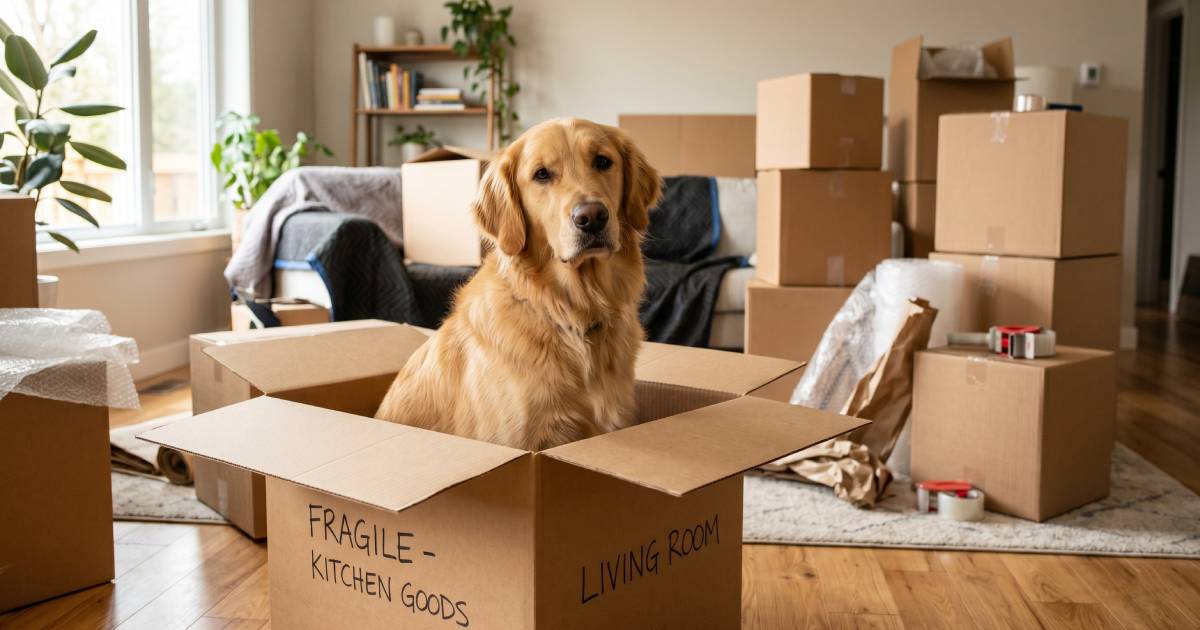
78% of American pet owners travel with their pets each year – and moving is no exception. But a home move is different from a road trip. It is longer, more disruptive, and involves strangers carrying loud furniture through spaces your pet considers safe territory. Here is exactly how to do it right, from 4 weeks out to move day to settling in at the new place.
How Moving Affects Pets
Pets do not understand what is happening. What they experience is: their environment changes, their routine disappears, unfamiliar people enter their space, and then they end up somewhere completely new. Anxiety is the leading concern during pet relocation, and the same applies to moving. Dogs tend to express this through behavior changes – pacing, barking, or trying to escape. Cats more commonly hide, stop eating, or develop digestive issues. Both are normal stress responses and both are manageable with the right preparation.
4 Weeks Before Moving Day
Schedule a vet visit
Get a clean bill of health before the move, update vaccinations, and ask your vet about anti-anxiety options if your pet is sensitive to change. For moves across state lines, you will need a health certificate – most states require one issued within 10 days of travel. Check your destination state’s requirements before you book the appointment.
Update ID and microchip information
This is the most overlooked step and the most important if something goes wrong. Update your pet’s microchip registration and order new ID tags with your new address before move day – not after. Pets are most likely to run during the chaos of moving day, and a found pet with old contact information is extremely difficult to reunite with their owner.
Research pet policies at your new home
If you are renting, confirm the lease explicitly allows your specific pet – breed, size, and species all matter. Some buildings ban specific dog breeds. Identify a vet in your new area now so you are not scrambling after the move.
2 Weeks Before Moving Day
Desensitize your pet to boxes
Leave open moving boxes around the house. Let your pet investigate them. This reduces the anxiety spike that comes from suddenly seeing everything packed on move day. Do not change your pet’s feeding schedule, walk times, or bedtime routine – routine is their anchor during an unsettled period.
Pack a pet essentials bag – these items stay with you, not on the truck
- 3–5 days of food in the original bag
- Food and water bowls
- Medications with dosing instructions
- Favorite toy or comfort object
- Leash, collar with current ID tags, harness
- Litter and litter box for cats
- Carrier or crate
- Veterinary records and health certificate
- Cleanup supplies
Move Day
Keep pets away from the action
The biggest mistake people make is leaving pets loose in the house on moving day. Movers constantly open and close the front door. Pets bolt. A stressed dog or cat can slip through an open door in seconds and end up lost in an unfamiliar area before anyone notices.
Best options in order of preference:
- Board them for the day – eliminates escape risk entirely
- Confine to one room with a sign on the door – “Pet inside – please do not open.” Make it the last room packed. Leave their bed, water, and a worn item of your clothing inside.
- Take them to a friend or family member for the day and pick them up after the truck leaves
For long-distance moves: driving vs flying
| Option | Best for | Key consideration |
|---|---|---|
| Drive with pet in car | Most pets, any distance under 12 hours | 64% of pet owners prefer car travel – most comfortable for pets |
| Fly with pet in cabin | Small pets under ~20 lbs | Check airline policy – size limits and breed restrictions vary |
| Fly pet as cargo | Large dogs that cannot fit in cabin | Higher risk – only use IATA-approved carriers, avoid extreme temperatures |
| Pet transport service | Long moves where driving is not practical | Handles all logistics including health certificates |
In the Car: Making the Drive Comfortable
- Secure your pet – use a crash-tested harness, carrier, or rear barrier. A loose dog is a safety hazard.
- Stop every 2–3 hours for water, bathroom breaks, and a short walk
- Keep the car cool – never leave a pet in a parked car, even with windows cracked
- Skip a large meal before driving – reduces risk of motion sickness
- Bring their bed or blanket – familiar smells reduce travel stress significantly
At the New Home: The First 48 Hours
Start with one room
Set up one room completely before letting your pet explore the rest of the house. Give them a safe base – their bed, their bowls, their toys in a familiar arrangement. Let them investigate the rest of the home gradually on their own terms.
Cats: keep them indoors for 2–3 weeks minimum
Cats let outside before they have established the new home as their territory will sometimes try to return to the old address. Keep cats indoors for at least 2–3 weeks after moving. Some cats take up to 6 weeks to fully accept a new home as their territory.
Dogs: walk the neighborhood immediately
Walk your dog around the block on the first evening. Let them sniff everything. This territorial familiarization is how dogs understand where home is. Stick to the same walk times, feeding times, and bedtime schedule from day one.
Signs of normal adjustment vs signs to call your vet
| Normal in weeks 1–2 | Call your vet if it continues past 2 weeks |
|---|---|
| Hiding (especially cats) | Complete refusal to eat for 48+ hours |
| Clingier than usual | Lethargy that does not improve |
| Reduced appetite for a few days | Vomiting or diarrhea lasting more than 2 days |
| More vocal than usual | Aggression that is out of character |
| Sleeping more | Excessive self-grooming or hair pulling (cats) |
Frequently Asked Questions
How long does it take for a pet to adjust to a new home?
Most dogs settle within 1–3 weeks. Cats often take 2–6 weeks. Some pets, particularly older animals or those with anxiety, can take up to 3 months to fully relax. Consistency in routine is the biggest factor in speeding up the adjustment.
Should I use calming medication during a move?
Talk to your vet first. Over-the-counter options like Adaptil (dogs) and Feliway (cats) – pheromone diffusers and sprays – are a good starting point. For pets with significant anxiety, your vet may prescribe something stronger for move day specifically.
Can I put my pet on the moving truck?
Never. Temperature, ventilation, and movement inside a moving truck are all unpredictable and dangerous for animals. Pets always travel with you in the car or via a dedicated pet transport service.
What if my pet escapes during the move?
Contact local animal shelters immediately with a current photo. Post on Nextdoor and local Facebook groups. Confirm your microchip registration is current. Most lost pets during moves are found within a few miles – they often try to return to the old address if they know the route.